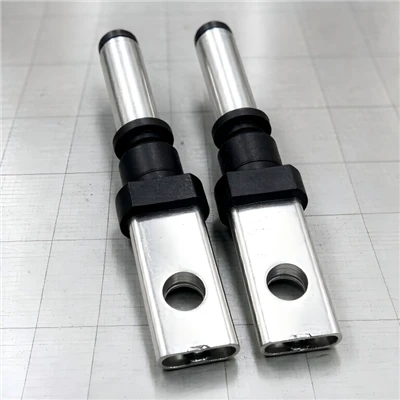
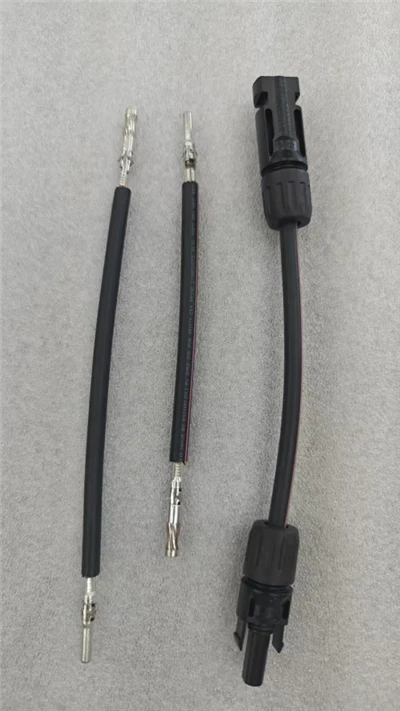
What Is Precision Metal Stamping? (And What Makes It 'Precision')
Let's strip away the jargon. Metal stamping is exactly what it sounds like: you take a strip of metal, feed it into a press fitted with a custom die, and at each station inside that die the metal gets cut, bent, formed, or coined into shape. When the strip emerges from the other end, you've got a finished terminal.
The 'precision' part is where things get interesting - and where most of the quality problems in this industry actually originate.
For automotive work, we're holding tolerances in the ±0.02 mm range. To put that in perspective, a human hair is roughly 0.08 mm thick. We're controlling dimensional variation to a quarter of that. Why? Because if the contact spring section on a female terminal is 0.03 mm too wide, the insertion force jumps and your assembly line operators start complaining. If it's 0.03 mm too narrow, the contact resistance drifts and you've got a warranty issue six months down the road.
A well-designed progressive die can form all of the following features in a single pass:
Contact areas - the mating surfaces that actually carry current
Crimp barrels - the section that gets squeezed onto the wire conductor
Locking features - small tabs or barbs that click into the connector housing
Spring contacts - engineered to maintain force over thousands of mating cycles
Mating sections - the interface geometry that has to match its counterpart exactly
Positioning features - the unsung hero that makes automated insertion actually work
The real beauty of progressive stamping: all of these features are created in one continuous strip. No secondary operations, no manual handling between steps. At 200–600 strokes per minute, a single press can produce over a million terminals per week. That's the only way you economically supply a modern vehicle program, which might use 3,000–5,000 terminals per vehicle.
Why Automotive Terminals Are a Different Beast
A terminal that works fine in a desk lamp won't survive under a car hood. We learned this early on when we started getting requests from automotive Tier 2 suppliers. The operating envelope is just brutal compared to consumer electronics.
|
What the terminal faces |
What it does to a poorly stamped part |
|
Constant vibration |
Loosens weak crimps, fatigues thin sections |
|
–40°C to 150°C+ swings |
Changes spring characteristics, affects contact force |
|
Humidity & salt spray |
Drives corrosion into any micro-crack or exposed edge |
|
High current loads |
Amplifies resistance problems from poor contact geometry |
|
Thousands of mating cycles |
Wears down contact surfaces, increases insertion force |
|
Automated assembly lines |
Rejects any part that's even slightly out of tolerance |
Here's something the textbooks don't tell you: when a terminal's dimensions drift by a couple hundredths of a millimeter, the failure modes in the field are rarely obvious. You don't get a clean 'open circuit.' Instead you get:
Contact resistance creeping up over time → heat builds → the connection slowly degrades
Insertion force spiking → automated insertion equipment jams or chews up housings
Locking features that don't fully engage → terminals back out during vehicle vibration
Assembly operators fighting the part → line slows down → cost per harness climbs
This is exactly why automotive terminal stamping demands more than just a capable press. It demands a die that holds tolerance over millions of cycles, a process that's monitored in real time, and a team that knows what 'good enough' looks like - and refuses to ship it.
The Stamping Process: Step by Step
Here's how we actually run a production job, from raw coil to finished terminal ready for plating.
Step 1: Material Selection - Where Most Projects Live or Die
Everything starts with the metal strip. Get this wrong and nothing downstream can save you. We've seen customers try to save a few cents per kilogram on material, only to discover their contact resistance was drifting out of spec at volume.
|
Material |
What it's good for |
|
Copper |
Maximum conductivity; softer. Best for lower-force applications where you want the absolute best current carry. |
|
Copper alloys |
The automotive sweet spot - 80–90% of copper's conductivity with significantly better spring properties and strength. This is where most automotive terminals land. |
|
Brass |
Cost-effective, easy to stamp, decent conductivity. Common for general-purpose and industrial terminals. |
Material selection is also where we have some of our most honest conversations with customers. We've had engineers spec a premium copper alloy because 'it's the best.' Maybe. But if the application is a ground connection that carries 5 amps and lives inside a sealed housing, you don't need the best - you need the right. Saving money on material that doesn't compromise performance is part of our job.
Step 2: Die Design & Build - The Heart of the Operation
The die is everything. A poorly designed die will never make good parts, no matter how good the press or the material. We've been called in to fix programs where the previous supplier's die was so badly laid out that the terminal had to be hand-formed at a secondary station. That's not stamping - that's blacksmithing.
When we design a progressive stamping die for automotive terminals, here's what we're thinking about:
Strip layout - the sequence of operations that transforms flat metal into a 3D terminal. Get the sequence wrong and you'll work-harden the material before the final form station.
Material thickness - usually 0.2 mm to 0.8 mm for terminal applications. Thinner materials are more sensitive to tool wear.
Forming direction - which features get formed up, which get formed down, and in what order. This affects spring-back compensation.
Tolerance stack-up - how small variations at each station compound through the die. We model this before we cut any tool steel.
Wear management - which sections of the die will see the most stress and need the hardest tool steel (or even carbide inserts).
Because we build our own dies in-house, we can iterate quickly. Customer needs a design tweak? We're not waiting on an outside tooling vendor for six weeks. We turn it around in days. This is one of the biggest advantages of working with a manufacturer that controls its own tooling.
Step 3: Progressive Stamping in Production
Once the die is mounted and qualified, production is a matter of discipline, not drama. The strip advances automatically with each press stroke. No manual handling between stations. No opportunity for parts to get mixed up or dropped.
|
Station type |
What it does |
|
Cutting / punching |
Trims the strip to width, punches holes or slots for indexing |
|
Bending |
Creates angles and transitions between flat and formed sections |
|
Forming |
Shapes the 3D features - crimp barrels, contact springs, locking tabs |
|
Coining |
Compresses material to improve density and dimensional accuracy in critical areas |
|
Final shaping |
Brings the terminal to its finished geometry before ejection |
A detail that matters: we monitor the press force signature at each station in real time. If a station starts drawing abnormal tonnage, the press stops automatically. That's how you catch a chipped punch or a worn form block before it scrapes a thousand terminals. It's also something that IATF 16949 auditors look for - and most shops, frankly, don't do it.
Step 4: Terminal Forming - The Details That Actually Matter
After the progressive die does its work, the terminal has distinct functional zones. Each one has a job. Each one gets its own inspection criteria.
Contact spring - Provides controlled, repeatable force against the mating terminal. Too soft and the connection drifts over time; too hard and insertion force becomes a problem for assembly.
Crimp barrel - Gets squeezed onto the wire. Its geometry determines whether the copper strands cold-weld to the terminal wall or just get crushed into a messy lump.
Locking feature - A small tab that clicks into the connector housing. It has to be just right: secure enough to stay put, but not so aggressive that it damages the housing on insertion.
Mating section - The business end. Its dimensional accuracy determines contact resistance and mating feel.
We once had a customer complain that our terminals were 'too tight' in their housing. Turned out our locking tab was dead-on to the drawing, but their housing mold had worn and the slot was 0.05 mm oversized. We caught it by measuring both sides of the interface. That kind of forensic approach is what keeps programs running.
Step 5: Surface Treatment & Plating
Most automotive terminals get some form of plating. The default is tin - it's solderable, corrosion-resistant, and cost-effective. For the majority of under-hood applications, tin is the right answer.
But not always. Here's the decision tree we walk through with customers:
Tin plating - Standard choice. Good corrosion resistance, excellent solderability, affordable.
Silver plating - For high-current applications where conductivity is critical and you can't afford any plating resistance.
Gold plating - Reserved for low-current signal applications where contact reliability is paramount (think airbag sensors, safety-critical signals). It's expensive, so we only recommend it when the application truly demands it.
Specialty alloys - For specific corrosion or fretting requirements, particularly in harsh-environment connectors.
Plating thickness gets verified as part of our inspection process. Too thin and you lose protection; too thick and you start affecting dimensional tolerances or insertion force. Like most things in stamping, it's a balancing act - not a specification you can set and forget.
Quality Control: Where IATF 16949 Comes In
Automotive quality isn't a checklist - it's a mindset. Anyone can print an ISO certificate and frame it on the wall. The question is whether your production team actually lives it on the shop floor at 2 a.m. when a press starts acting up.
Our manufacturing system is certified to IATF 16949, the global quality management standard for automotive production. Here's what that looks like in practice:
|
What we monitor |
Why it matters |
|
Material thickness |
Affects spring force, insertion feel, and crimp performance |
|
Terminal dimensions |
Must match mating connector specs exactly - no exceptions |
|
Contact geometry |
Drives electrical performance and long-term reliability |
|
Crimp dimensions |
Determines whether the wire cold-welds or just gets squeezed |
|
Burr control |
Sharp edges can cut wire strands or damage insertion equipment |
|
Plating quality |
Corrosion resistance and contact stability depend on uniform coverage |
|
Mechanical testing |
Pull tests and insertion/extraction force verification on sampled parts |
The key difference between IATF 16949 and a generic quality system: we don't just inspect at the end. We monitor at multiple stages - incoming material, in-process at set intervals, and final shipment. That's the only way to catch drift before it becomes a customer complaint. Because once it's a complaint, you've already lost time, money, and trust.
Where These Terminals Actually End Up
It's easy to get lost in the technical details of stamping and forget that these terminals are going somewhere - usually into a vehicle that someone's going to drive their kids to school in. So here's where our stamped electrical terminals actually ship:
Automotive wiring harnesses - the largest single application by volume. A typical mid-size car has 3,000+ terminals across dozens of harnesses.
Automotive connectors - both sealed (under-hood, exposed) and unsealed (interior) systems.
Sensor systems - everything from wheel speed sensors to camera modules to LiDAR. These often demand the tightest tolerances because signal integrity matters.
Electronic control units (ECUs) - the brains behind modern vehicle functions. Terminals here need stable contact over the vehicle's entire service life.
Lighting systems - headlamps, taillamps, interior ambient lighting. LED systems especially push current density higher.
Battery systems - both 12V auxiliary and high-voltage traction battery packs in EVs.
Electric vehicle systems - charging equipment, power distribution, motor drives, BMS interconnects.
The EV transition is accelerating demand for precision stamping parts across the board. Higher voltages (400V, 800V architectures), higher currents, and new packaging constraints are pushing terminal designs in directions we couldn't have imagined a decade ago. If you're designing for next-generation platforms, the conversation about materials and plating starts earlier - usually at the concept phase, not after the drawing is finalized.
Why Customers Come to JDE Auto
We'll be straight with you: there are plenty of metal stamping manufacturers in the world. Here's what tends to differentiate us for the engineers and buyers we work with:
|
Capability |
What it means for you |
|
High-volume production with tight tolerances, real-time press monitoring, and documented process control. |
|
|
Stamping die development |
In-house tooling means faster iterations, lower tooling risk, and no finger-pointing between toolmaker and stamper. |
|
Injection molding |
We mold the connector housings that your terminals go into - same facility, same quality system. |
|
Connector housing manufacturing |
One supplier for both stamped and molded components. You're not managing four vendors. |
|
Crimp terminal manufacturing |
Full terminal production from raw strip to finished, plated, inspected part. |
|
Wire harness assembly |
We can deliver subassemblies, not just loose components. Tape-and-reel, custom cut lengths, pre-assembled harness sections. |
|
OEM & ODM services |
From concept to production. We support custom programs with full confidentiality and IP protection. |
The bottom line: you're not managing a supply chain spreadsheet with eight different vendors in three different time zones. You're working with one manufacturing partner that controls the entire process - from the moment the metal strip comes in the door to the moment your finished harness ships out.
FAQ: Real Questions from Real Customers
What exactly is precision metal stamping?
It's a high-speed manufacturing process that uses custom dies to shape metal strip into precise components - like automotive terminals - at high volume with tight tolerances. Think of it as 'mass production for metal parts that need to be identical to within a hair's width.'
Why is stamping used for automotive terminals instead of machining?
Machining is too slow and too expensive at the volumes automotive requires. A single progressive die can produce thousands of terminals per hour with near-zero variation. Machining would be like using a scalpel to cut a field of wheat - technically possible, economically absurd.
What materials do you typically use for automotive terminal stamping?
Copper, copper alloys, and brass are the standards. Copper for maximum conductivity, copper alloys for the best balance of conductivity and spring properties (this is what most automotive terminals use), and brass when cost is the primary driver and performance requirements are moderate.
How does JDE Auto ensure quality?
Our system is IATF 16949 certified. We monitor critical dimensions at multiple stages - incoming material inspection, in-process checks at set intervals during production, and final QC before shipment. We also do pull testing and insertion/extraction force verification on sampled parts. And we monitor press force signatures in real time to catch tool wear before it affects parts.
Can you handle custom terminal designs?
Yes. This is actually most of what we do. Because we develop our own stamping dies in-house, we can take a terminal from concept sketch to production-ready part without involving outside tooling vendors. Send us a drawing - or even just a rough idea of what you need - and we'll work with you to develop the right solution.
What's the typical lead time for a new terminal program?
It depends on complexity, but for a custom progressive die, plan on 4–8 weeks from final design approval to first article samples. If you're working from an existing design or a standard terminal type, we can often ship production parts much faster. The honest answer: it's always shorter when the customer's engineering team is responsive and decisive.
Conclusion
Precision metal stamping is the unglamorous foundation of modern automotive electrical systems. Every terminal in every wiring harness - from the simplest ground connection to the most complex high-speed data link - started as a flat strip of metal running through a precision die at 400 strokes per minute.
At JDE Auto, we've built our entire operation around doing this well. Stamping dies, presses, injection molding, plating coordination, assembly - all under one roof, all held to automotive quality standards. We're not the biggest manufacturer in the world, and we're not trying to be. We're trying to be the most reliable partner for the customers who care about getting their terminals right.
|
Have a terminal project in mind? Send us your drawings or specs - we'll review them and come back with a quote. No drawings yet? Tell us about your application and we'll help you figure out the right approach. |
Appendix: On-Page SEO Optimization Checklist
For the web team publishing this content, here's the practical checklist we use before any technical article goes live on the JDE Auto site.
|
# |
Item |
Details & Notes |
|
1 |
H1 tag (single, unique) |
Page must have exactly one H1. Use the article title. All other sections use H2/H3. |
|
2 |
Title tag (50–60 chars) |
Precision Metal Stamping for Automotive Terminals | JDE Auto |
|
3 |
Meta description (150–160 chars) |
Write for humans, include primary keyword naturally. Avoid keyword stuffing. |
|
4 |
Primary keyword in first 100 words |
Should appear in the introduction paragraph organically. |
|
5 |
Keyword density (1–2%) |
Don't force keywords. Write naturally; synonyms and related terms are fine. |
|
6 |
Internal links (2–4) |
Link to /precision-metal-stamping, /connector-housings, /automotive-terminals pages. |
|
7 |
Image ALT tags |
Every image needs descriptive ALT text containing relevant keywords where natural. |
|
8 |
Schema markup (FAQ) |
Add JSON-LD FAQ schema so Q&A can appear directly in search results. |
|
9 |
Page speed / Core Web Vitals |
Compress images to WebP, lazy-load below-fold media, minify CSS/JS. |
|
10 |
Mobile responsiveness |
Verify layout works on mobile. Tables should scroll horizontally if needed. |
|
11 |
Hreflang tags |
If multilingual, add hreflang annotations linking EN/ZH/DE versions. |
|
12 |
CTA placement |
Include at least one clear CTA above the fold and one at the end of the article. |
Note: SEO is not a one-time setup. Review rankings and click-through data quarterly. Update content when new materials, standards, or customer questions emerge. Search engines reward pages that stay current.